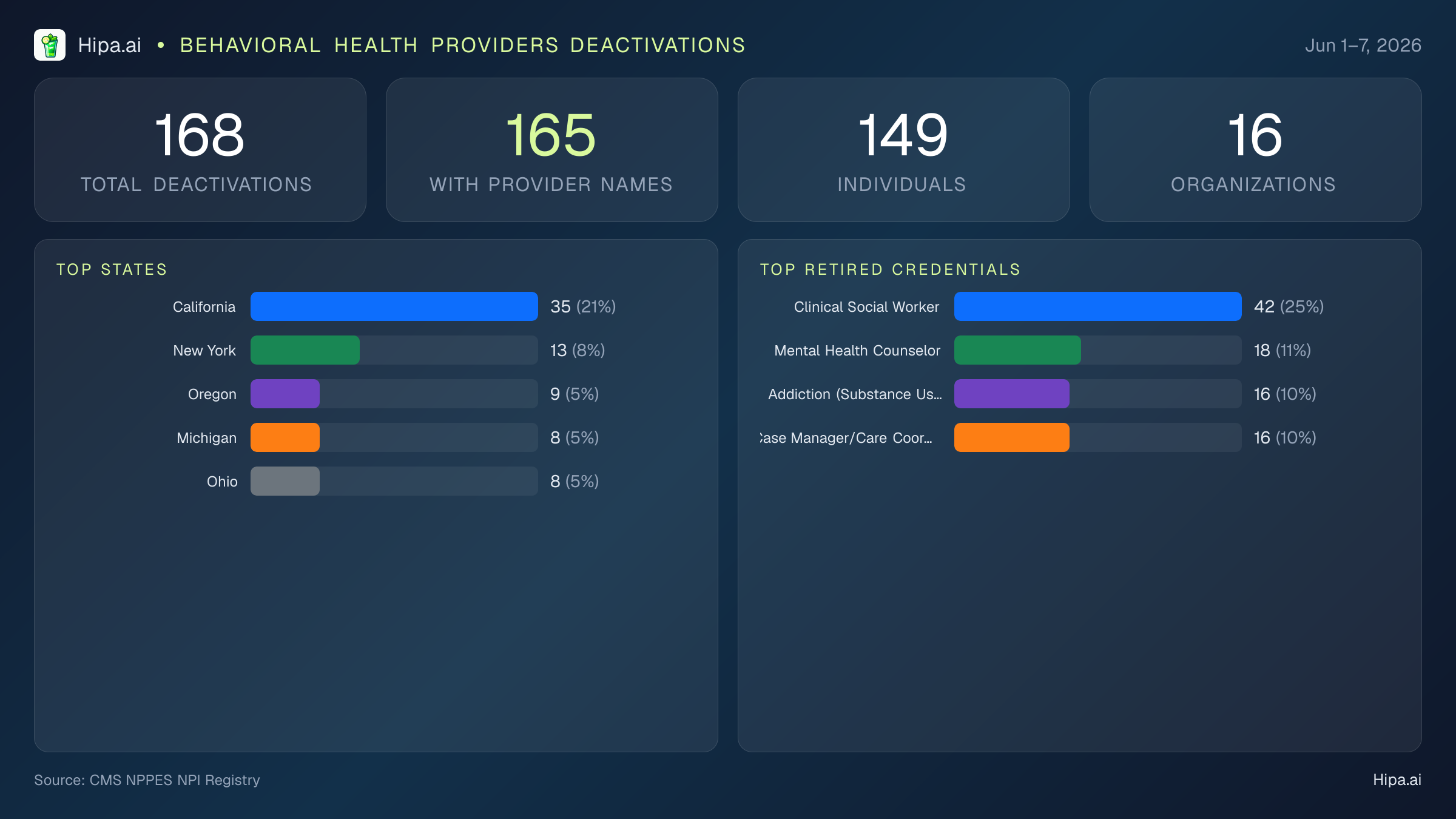
This week, the CMS NPPES registry recorded 168 NPI deactivations within the Behavioral Health Providers segment. Of these, Hipa.ai's name cache captured 165 records with retrievable names, while 3 records had their identifying information removed by CMS in accordance with privacy policies. California led all states with 35 deactivations, representing 21% of the named total. The deactivations included 149 individual providers and 16 organizations, indicating activity across both solo practitioners and larger entities.
Geographic Deactivation Trends
Geographically, California recorded the highest number of deactivations, with 35 entries, accounting for 21% of the named total. New York followed with 13 deactivations, representing 8%. Oregon, Michigan, and Ohio also saw notable activity, with 9, 8, and 8 deactivations respectively. This geographic distribution often reflects areas with larger healthcare workforces or significant population centers, where provider movement and registry updates are more frequent.
Credential and Taxonomy Mix
An analysis of the primary taxonomies among the named deactivations shows Clinical Social Workers represented the largest group, with 42 records, or 25% of the total. Mental Health Counselors accounted for 18 deactivations (11%), while Addiction (Substance Use Disorder) Counselors and Case Managers/Care Coordinators each saw 16 deactivations (10%). Professional Counselors contributed 15 deactivations, or 9%. This mix highlights the broad spectrum of roles within the behavioral health sector, from direct therapeutic services to support and coordination, indicating that NPI deactivations span various professional categories rather than being concentrated in a single specialty.
Context of NPI Deactivations
NPI deactivations are administrative status changes in the NPPES registry and do not inherently indicate license actions, malpractice, or that a provider has ceased practice. These changes can occur for various reasons, including retirement, changes in entity type, or the obtainment of a new NPI. As the federal registry ages, an annual increase in deactivations is expected, reflecting ongoing workforce churn and routine maintenance of provider records. This administrative process helps maintain the accuracy and currency of the national provider identifier database, which is crucial for healthcare operations and data integrity.