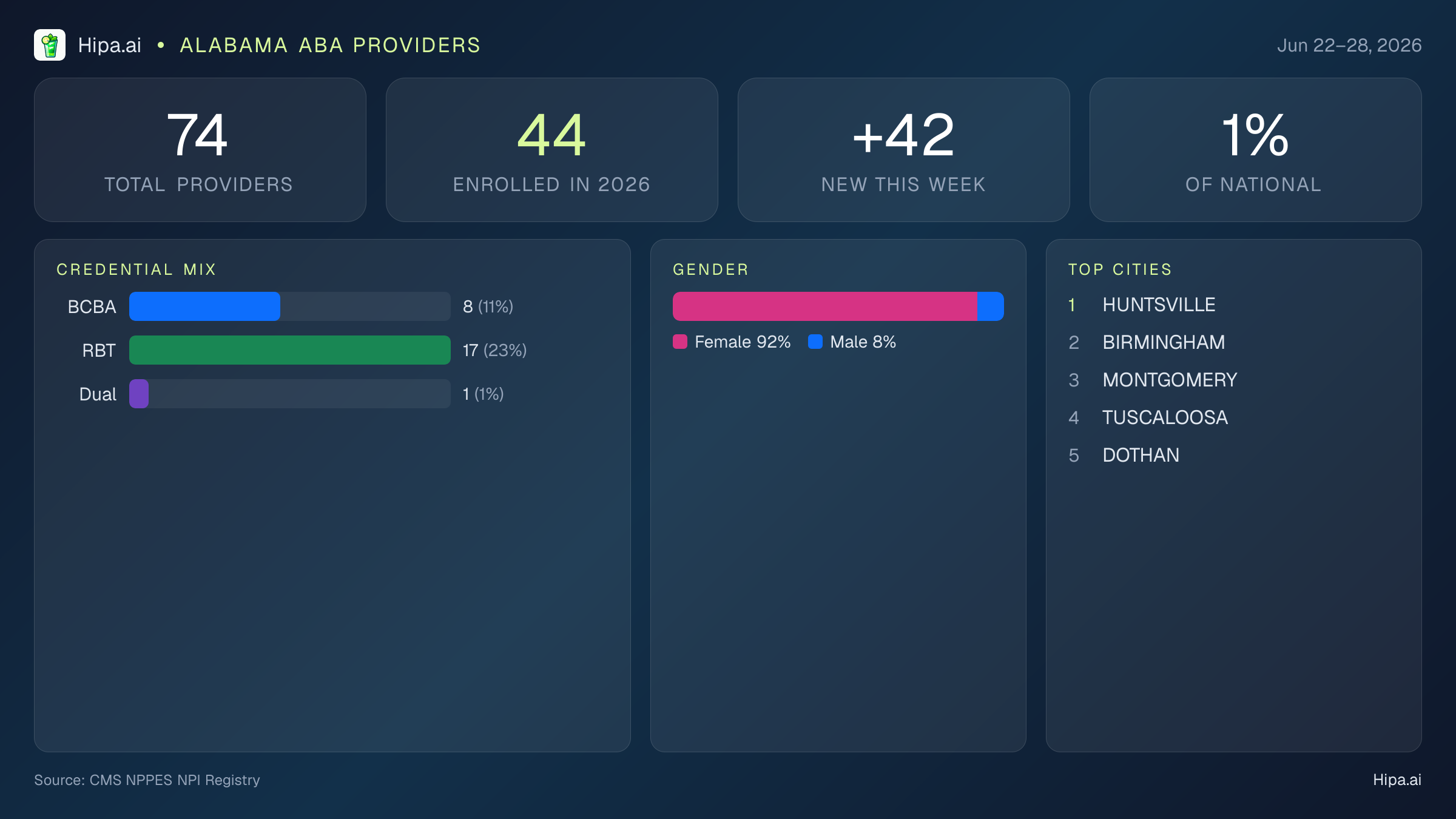
Alabama registered 74 total behavioral health providers in the latest CMS NPI registry weekly update, accounting for 1% of the national total. This week alone, 42 new providers were added. This steady, localized growth, rather than a large influx, suggests a consistent but measured expansion of behavioral health services across the state, typical for smaller regional markets.
ABA Workforce Dynamics
Within the applied behavior analysis (ABA) sector, the data highlights 8 BCBA credentials and 17 RBT credentials. It is important to note that these categories are not mutually exclusive, as 1 individual holds both BCBA and RBT credentials. This dual credentialing often signals career progression from direct service provision to a supervisory role. The ratio of RBTs to BCBAs suggests a growing demand for direct service providers, which necessitates a robust supervisory capacity from BCBAs to maintain the quality and ethical standards of ABA therapy. This balance is crucial for expanding ABA access effectively.
Provider Demographics and Organizational Presence
Of the 61 individual providers, 56 (92%) are female and 5 (8%) are male, a gender distribution consistent with broader trends in the behavioral health field. The update also included 13 organizations. No single organization appeared multiple times in this week's data, which may indicate a landscape of independent practices and smaller regional groups rather than significant expansion by larger, multi-state ABA chains like Blue Sprig or Action Behavior Centers.
Overall, this week's data reflects a gradual but consistent strengthening of Alabama's behavioral health workforce, particularly in direct service roles within ABA, which is vital for improving access to care across the state.