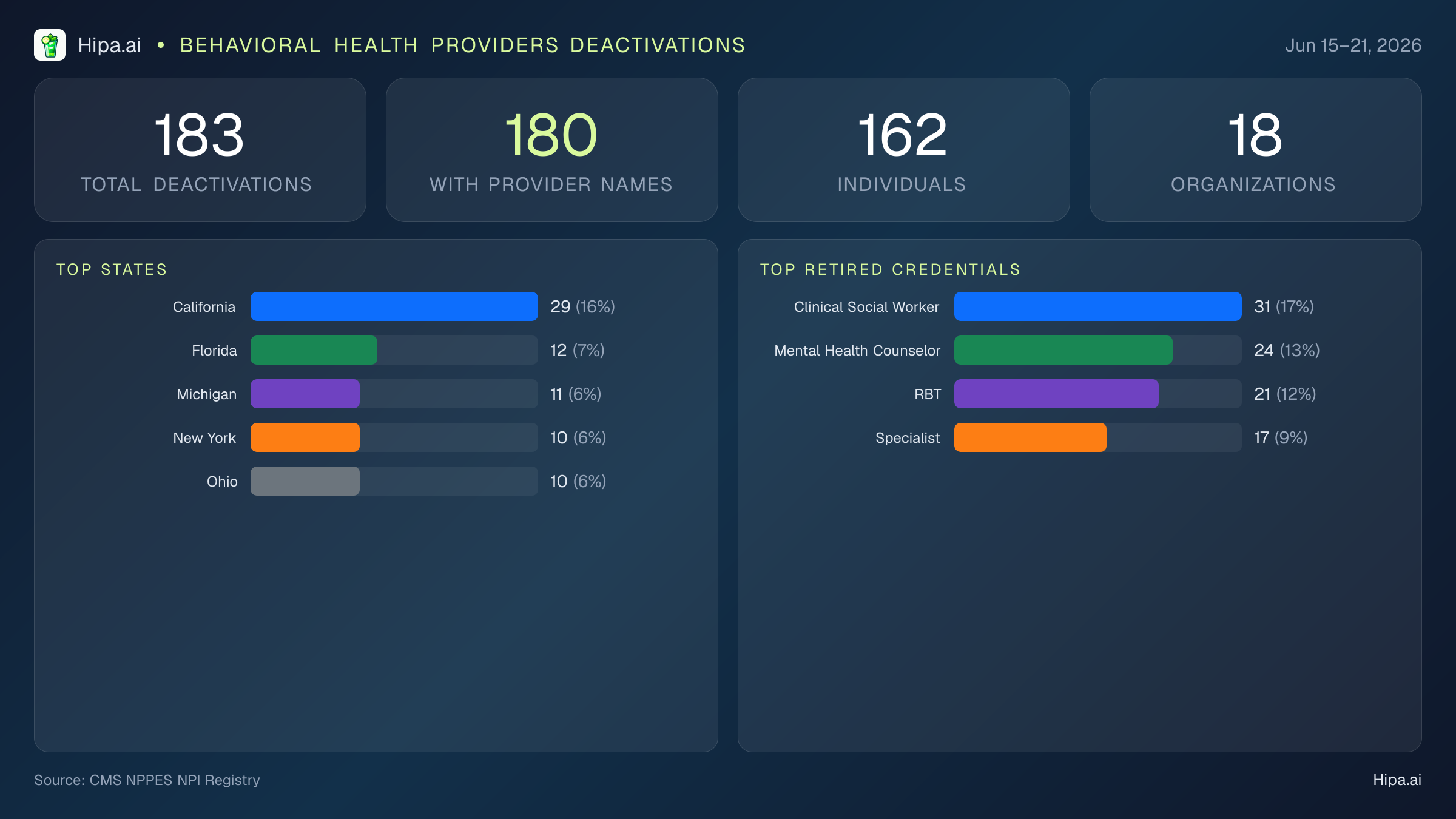
The CMS NPPES public registry recorded 183 NPI deactivations within the Behavioral Health Providers segment for the week of 2026-W25. Of these, 180 records had retrievable names, while three records had their identifying information, such as name and address, removed by CMS in accordance with privacy policies. California led all states with 29 deactivations, representing 16% of the total. The deactivations primarily involved 162 individual providers, alongside 18 organizations.
Geographic Patterns in Deactivations
Geographically, California's 29 deactivations accounted for 16% of the week's total, reflecting its large provider base and high population density. Florida followed with 12 deactivations, making up 7% of the total. Michigan, New York, Ohio, and New Jersey each recorded 10 deactivations, each representing 6% of the week's total. These patterns often correlate with states that have larger healthcare workforces and higher administrative churn within their respective registries.
Credential and Taxonomy Insights
An analysis of the named deactivated records reveals the composition of the behavioral health workforce impacted this week. Clinical Social Worker was the most frequent taxonomy, accounting for 31 deactivations, or 17% of the named records. Mental Health Counselor followed with 24 deactivations (13%), indicating a notable administrative change among this group. Registered Behavior Technicians (RBTs) represented 21 deactivations (12%), while "Specialist" was associated with 17 deactivations (9%). Addiction (Substance Use Disorder) Counselors also saw 15 deactivations, comprising 8% of the named total, highlighting the diverse professional roles within the behavioral health sector.
Understanding NPI Deactivations
NPI deactivations are administrative status changes within the federal NPPES registry and do not inherently indicate license actions, malpractice, or that a provider has ceased practicing. Common reasons for deactivation include providers retiring, changing their practice, consolidating multiple NPIs, or obtaining a new NPI. As the registry ages, a natural increase in deactivations is expected due to these routine administrative updates and workforce transitions.