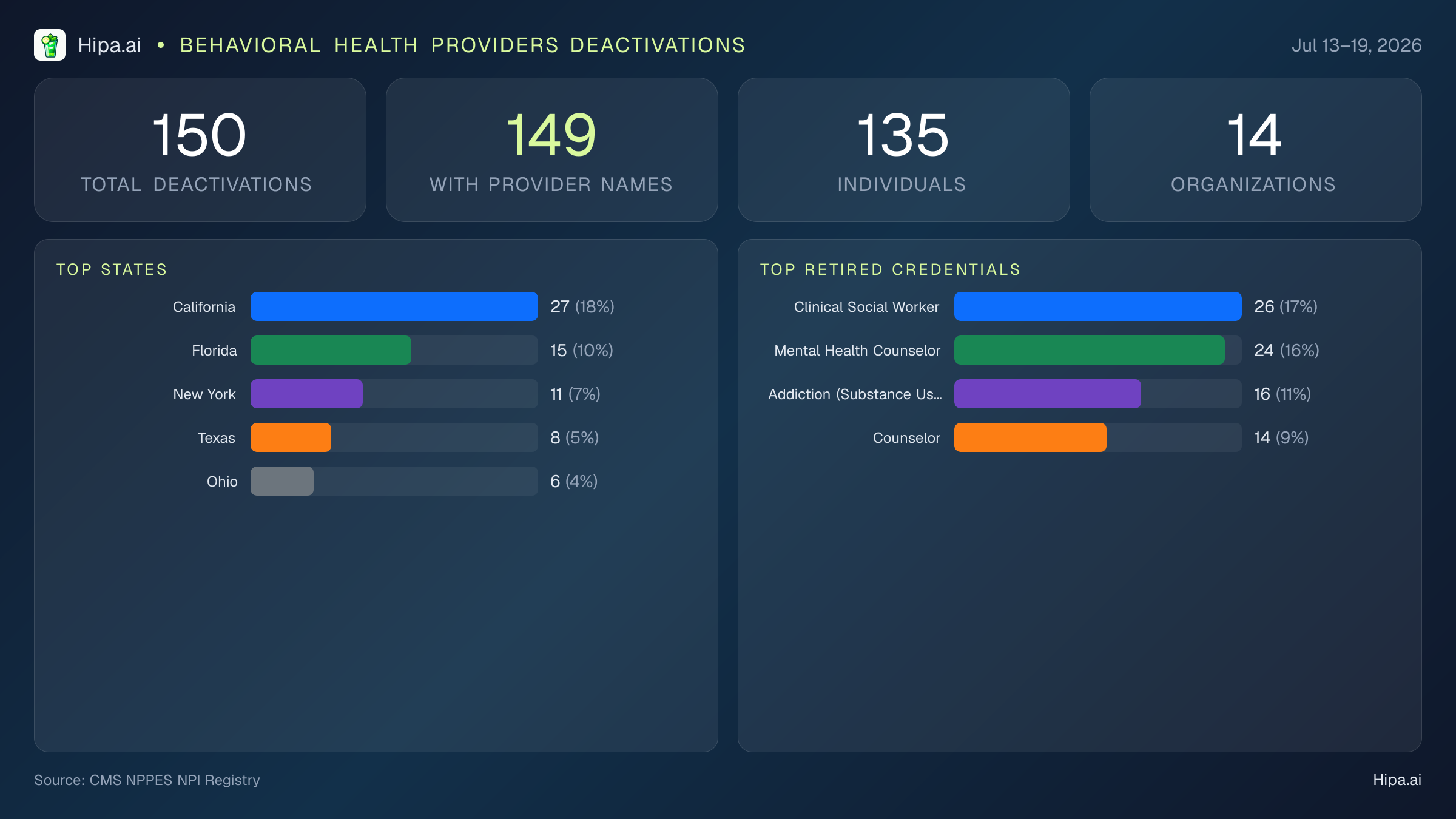
The CMS NPPES public registry recorded 150 NPI deactivations this week within the Behavioral Health Providers segment. Of these, Hipa.ai's name cache retained identifying information for 149 records, as CMS removes name and address data from most deactivated provider records. The majority of deactivations, 135, were for individual providers, with 14 organizational NPIs also deactivated. California led the states in deactivations, accounting for 27 records, or 18% of the national total.
Geographic Patterns in Deactivations
Geographically, California's 27 deactivations represented 18% of the total for behavioral health providers this week. Florida followed with 15 deactivations, making up 10%, while New York recorded 11 deactivations, or 7%. Texas saw 8 deactivations, which constituted 5% of the total. Ohio and North Carolina each reported 6 deactivations, both accounting for 4%. This concentration in populous states with active healthcare markets often reflects a higher volume of administrative changes as providers retire, relocate, or adjust their practice structures.
Credential and Taxonomy Mix
An analysis of the named deactivated records reveals a diverse mix of behavioral health specialties. Clinical Social Workers represented the largest group, with 26 deactivations, or 17% of the named total. Mental Health Counselors followed closely with 24 deactivations, accounting for 16%. Addiction (Substance Use Disorder) Counselors saw 16 deactivations, representing 11%, while general Counselors had 14 deactivations, or 9%. Registered Behavior Technicians (RBTs) also showed a notable number with 13 deactivations, comprising 9% of the named records. Additionally, Case Managers/Care Coordinators accounted for 11 deactivations, or 7%, and Professional Counselors and Psychologists each had 10 deactivations, both at 7%. This mix underscores the varied roles within the behavioral health workforce impacted by NPI deactivations.
Contextualizing NPI Deactivations
NPI deactivations are administrative status changes within the federal NPPES registry. They do not, by themselves, indicate license actions, malpractice, or that a provider has ceased practicing. Providers may have their NPI deactivated for various reasons, including retirement, changing their entity type, obtaining a new NPI, or clerical updates to their record. As the registry ages and the healthcare workforce evolves, an annual increase in deactivations is a consistent trend, reflecting ongoing maintenance and the dynamic nature of provider data.