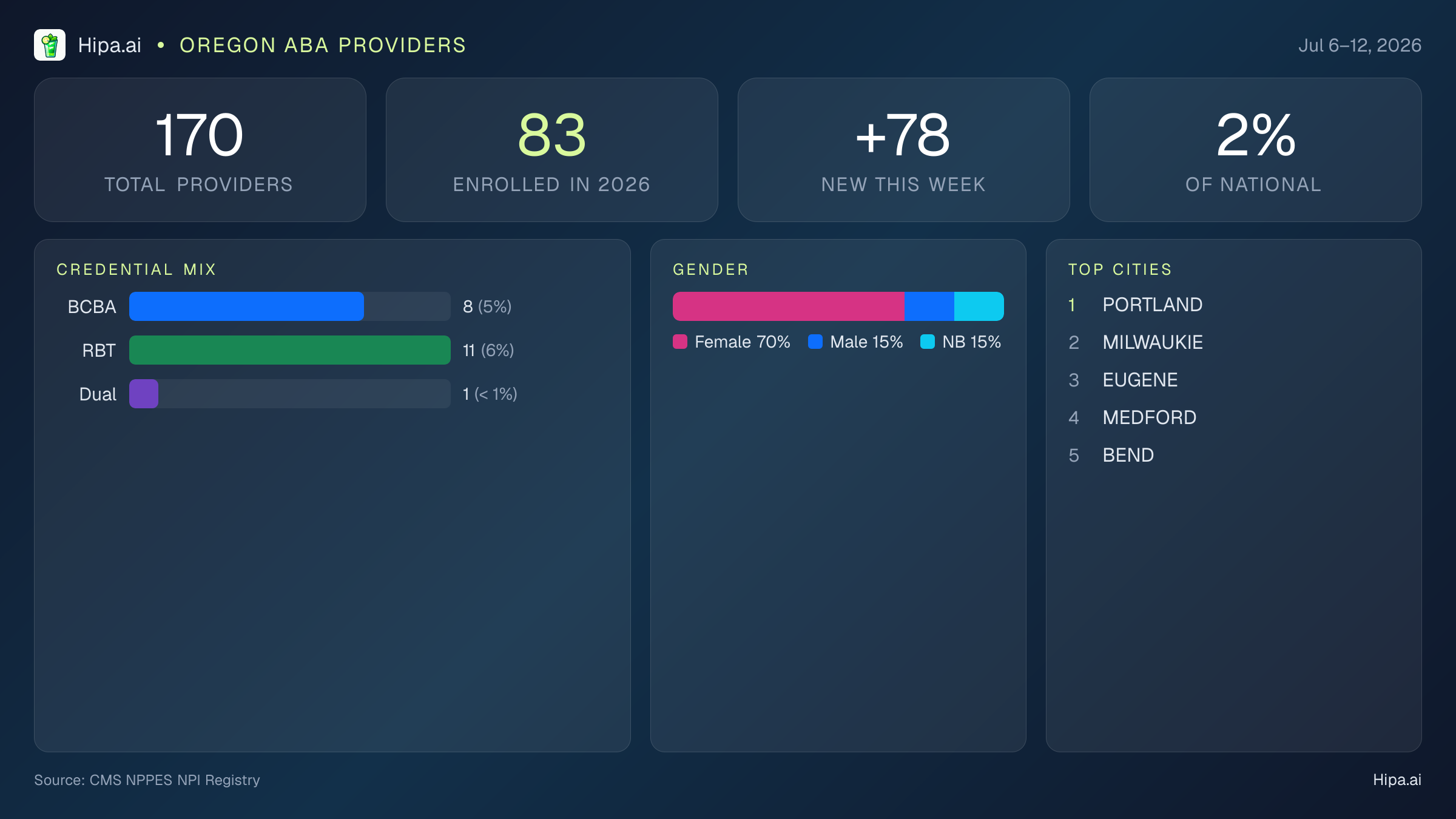
Oregon saw 170 behavioral health providers added in the latest CMS NPI registry update, contributing 2% of the national total. This steady influx of new professionals suggests a consistent, albeit not explosive, growth in the state's behavioral health workforce, which is crucial for expanding access to care across its diverse communities.
ABA Workforce Composition
Within the applied behavior analysis (ABA) sector, the data shows 8 BCBA credentials and 11 RBT credentials. It is important to note that these categories are not mutually exclusive, as 1 individual holds both BCBA and RBT credentials, often signifying a career progression from direct service to supervisory roles. The observed ratio of RBTs to BCBAs, approximately 1.4:1, is relatively low, suggesting that Oregon's ABA workforce may face challenges in providing adequate supervision capacity for RBTs, which is crucial for delivering high-quality ABA therapy.
Provider Demographics and Organizational Presence
Of the 158 individual providers, the gender breakdown shows 70% are female, 15% are male, and 15% identify as nonbinary. This distribution largely mirrors national trends in behavioral health professions. No specific organizations appeared multiple times in this week's registry update, indicating a diverse landscape of employers rather than dominance by a few large multi-state chains in this particular dataset.
Overall, this data points to a growing, diverse behavioral health workforce in Oregon, with a particular need to bolster BCBA numbers to support the expanding RBT base and improve ABA access for residents.