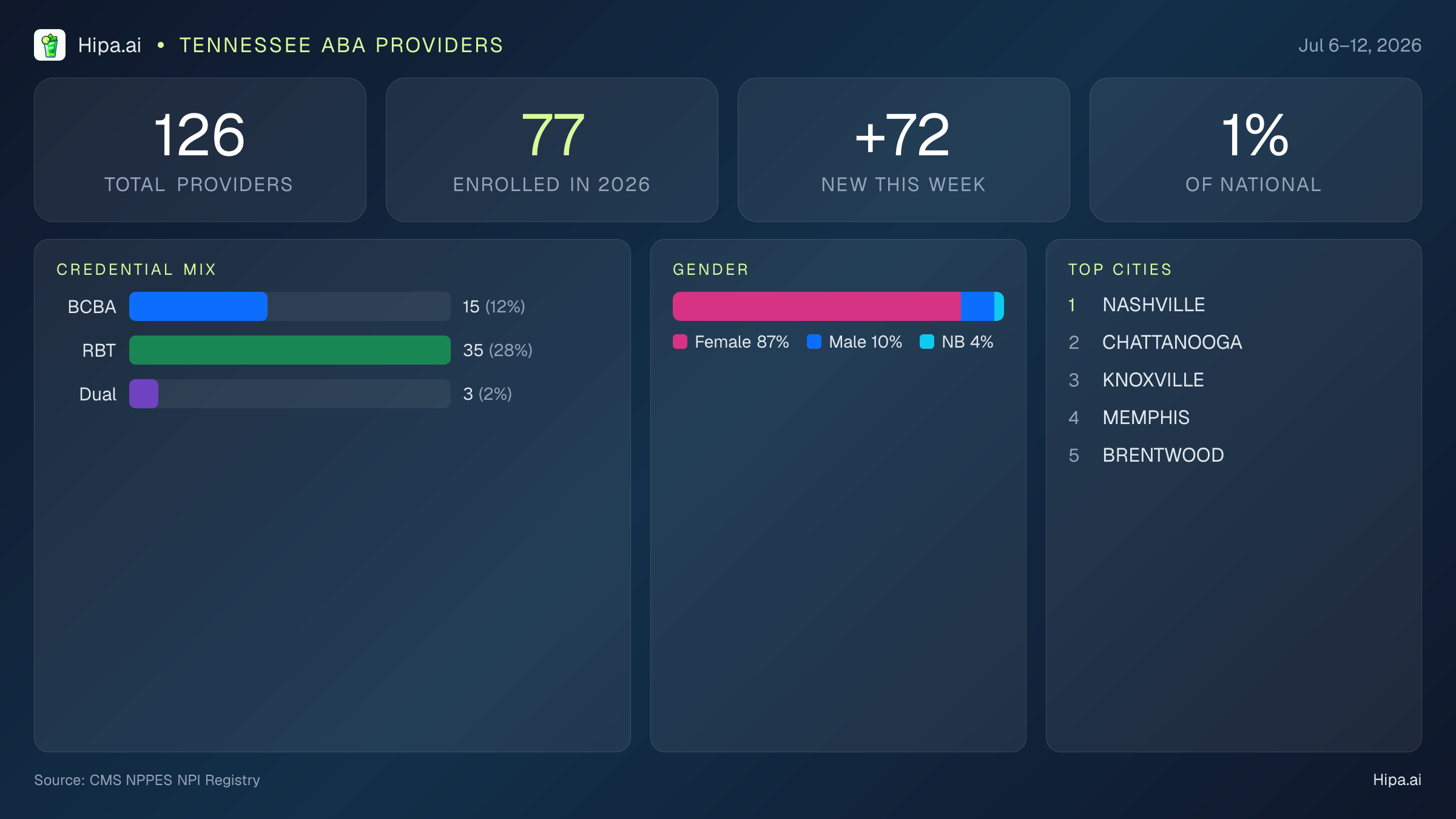
Tennessee saw 126 behavioral health providers added in the latest CMS NPI registry update, contributing 1% of the national total. A significant portion, 72 providers, were new this week, indicating a recent surge in workforce expansion efforts within the state, signaling a concentrated push to address behavioral health needs.
ABA Workforce Composition
Focusing on the applied behavior analysis (ABA) sector, the data shows 15 BCBA credentials and 35 RBT credentials. These credential counts are not mutually exclusive, as 3 individuals hold both BCBA and RBT credentials, often reflecting career advancement within the field. The ratio of RBTs to BCBAs (approximately 2.3 RBTs per BCBA) is a key indicator for supervision capacity. While a growing RBT workforce expands direct service availability, a healthy ratio of BCBAs is essential to ensure adequate supervision, maintain clinical quality, and support RBT professional development, which is critical for effective ABA therapy delivery across the state.
Provider Demographics
Among the 112 individual providers, the workforce is predominantly female, with 97 individuals (87%) identifying as female, 11 (10%) as male, and 4 (4%) as nonbinary. This gender distribution is consistent with national trends in behavioral health. No specific organizations appeared multiple times in this week's update, suggesting a diverse landscape of individual practitioners and smaller entities contributing to the state's behavioral health growth.
This consistent addition of behavioral health professionals, particularly within the ABA field, is vital for enhancing access to critical services across Tennessee. The emphasis on RBT growth suggests a focus on expanding direct service capacity, but sustained investment in BCBA development will be paramount for long-term workforce stability and quality care.