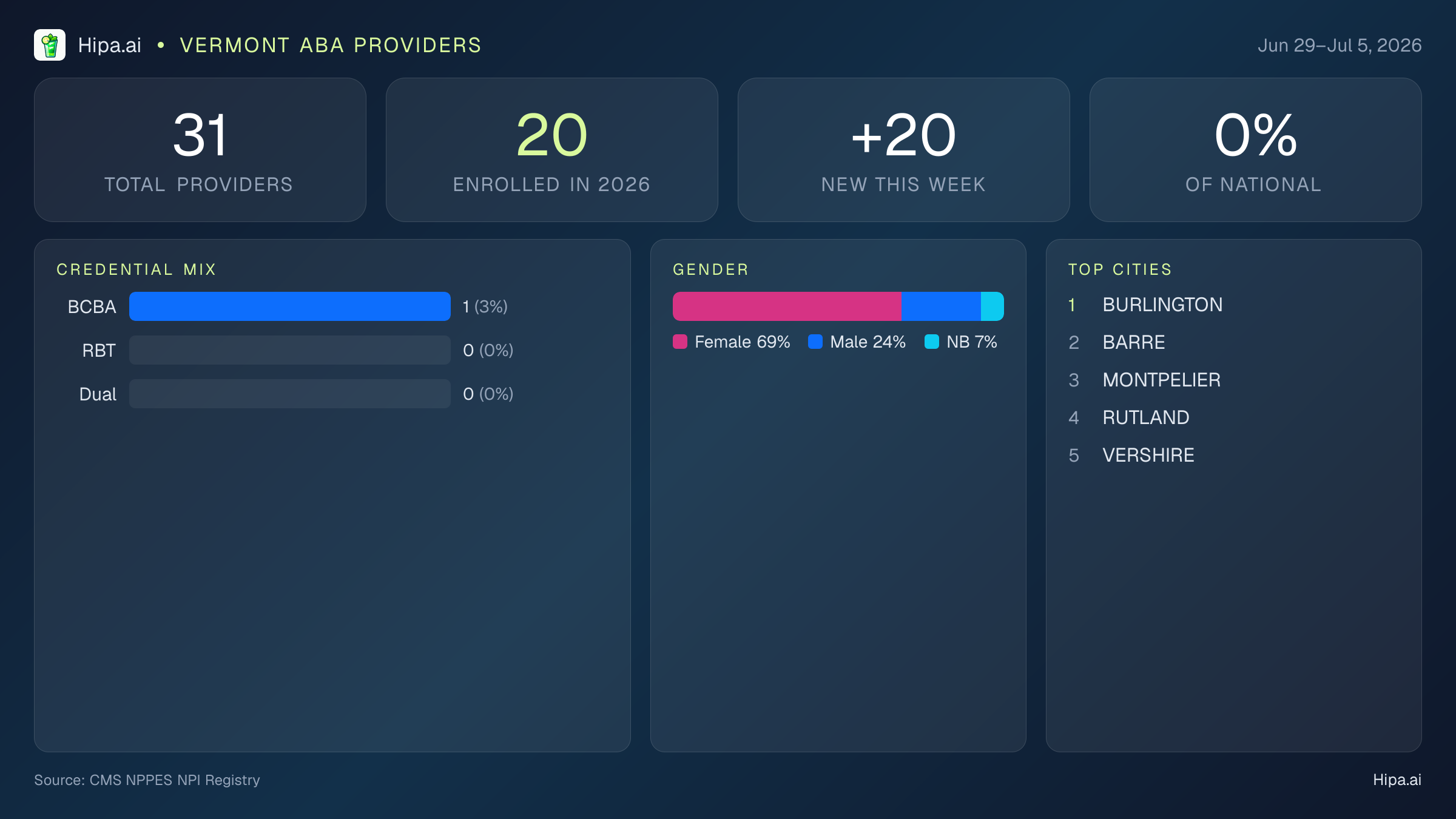
Vermont recorded a modest total of 31 behavioral health providers in the latest CMS NPI registry weekly update, with 20 new additions this week. This represents less than 1% of the national weekly total, indicating a relatively small or nascent behavioral health market compared to other states. Of these, 29 are individual practitioners and 2 are organizations.
ABA Workforce Dynamics
For the applied behavior analysis (ABA) sector, Vermont's data reveals a critical shortage. Only 1 provider holds a BCBA credential, and there are no RBT credentials reported. This absence of RBTs and minimal BCBA presence suggests an extremely limited ABA workforce in the state. For clinic operators and BCBAs, this signals a significant challenge in establishing or expanding ABA services, as the foundational supervision capacity and direct service provider roles are largely unfilled. The lack of dual BCBA+RBT credentials also indicates limited career progression opportunities within a structured ABA framework.
Provider Demographics
Among the individual providers, the workforce shows a clear gender distribution: 20 are female (69%), 7 are male (24%), and 2 identify as nonbinary (7%). This aligns with national trends showing a female-dominated behavioral health field. No specific organizations appeared multiple times in this week's data, suggesting a landscape of independent practitioners or smaller, localized entities rather than dominant multi-state chains.
Overall, this data points to significant unmet needs for ABA services and a substantial opportunity for workforce development in Vermont, particularly in recruiting and training RBTs and increasing the number of supervising BCBAs to improve access to care.