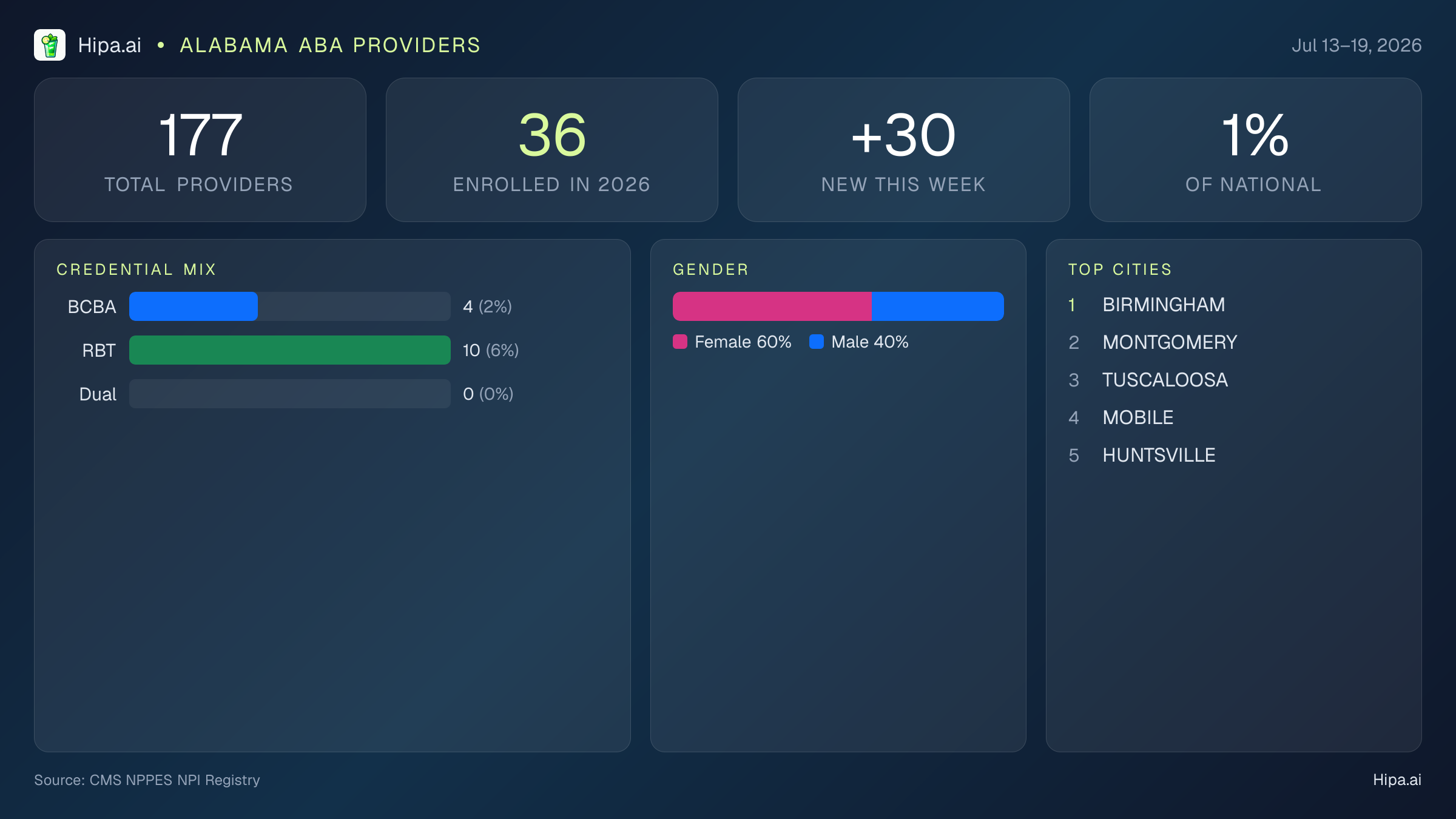
Alabama saw 177 behavioral health providers added in the latest CMS NPI registry update, contributing 1% of the national weekly total. While a smaller percentage compared to some states, this consistent influx of 30 new providers this week and 36 new this year signals a steady effort to expand the state's behavioral health workforce, crucial for addressing local demand for services.
ABA Workforce Dynamics
Focusing on the applied behavior analysis (ABA) sector, the data shows 4 BCBA credentials and 10 RBT credentials. There were no individuals reported with dual BCBA and RBT credentials in this update. The ratio of 10 RBTs to 4 BCBAs, or 2.5 RBTs per BCBA, indicates a growing base of direct service providers. However, with no dual-credentialed individuals reported this week, the state relies solely on BCBAs for supervision. While this ratio is manageable, sustained growth in BCBAs is essential to ensure adequate supervision capacity, maintain quality of care, and support the career progression of RBTs as the demand for ABA services continues to rise in Alabama.
Provider Demographics
Among the 164 individual providers, the workforce exhibits a clear gender distribution: 99 (60%) are female and 65 (40%) are male. This demographic breakdown aligns with broader trends observed in the behavioral health field nationwide, which often sees a higher representation of female professionals. No specific organizations appeared multiple times in this week's data, suggesting a diverse landscape of individual practitioners and smaller entities rather than the immediate impact of dominant multi-state employers like PE-backed ABA chains in this particular update.
This consistent addition of professionals, particularly in the ABA field, is vital for enhancing access to behavioral health services and meeting the growing demand in Alabama.