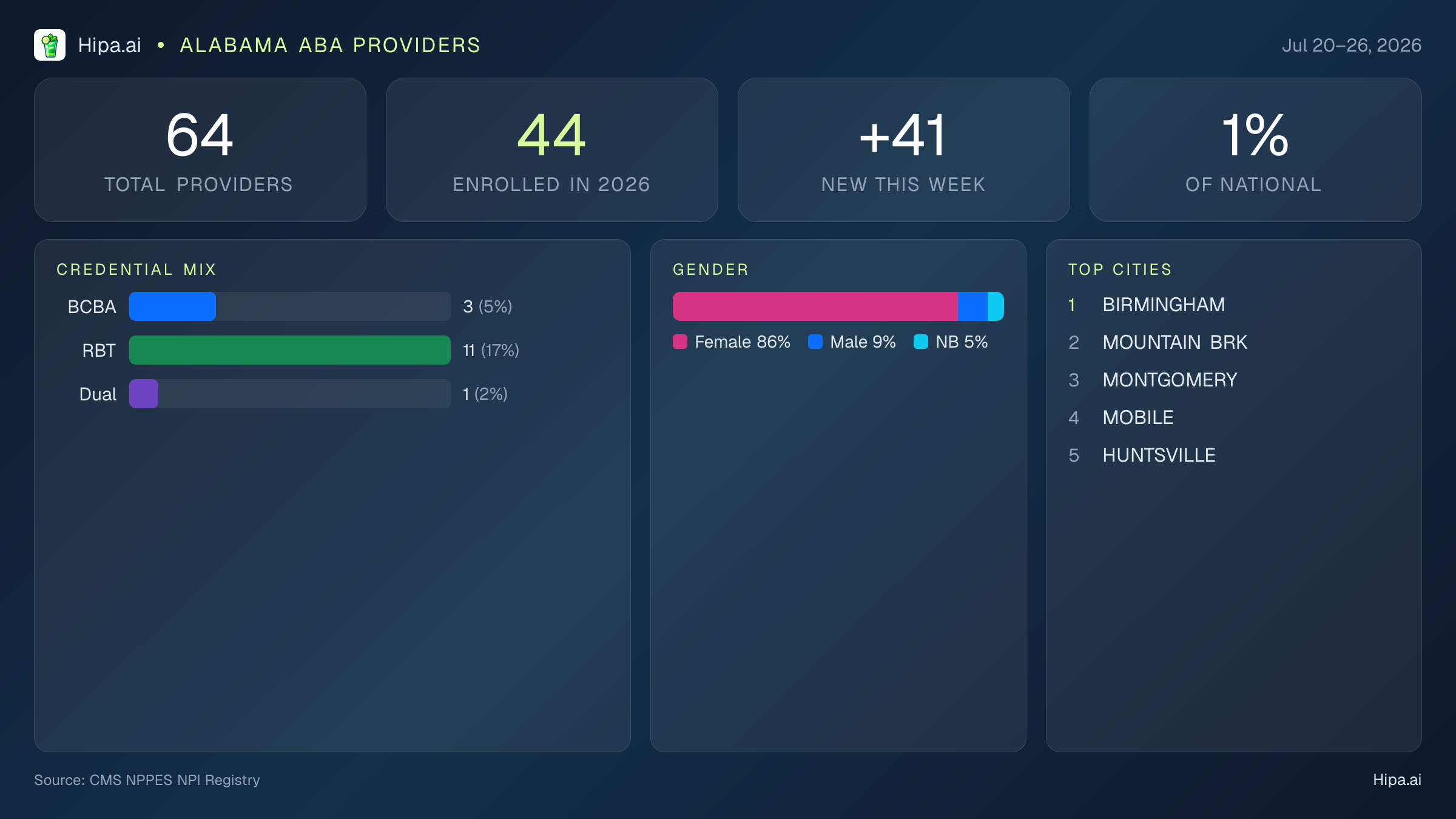
Alabama recorded 64 behavioral health providers in the latest CMS NPI registry update, with 41 new this week. This represents 1% of the national weekly total, signaling a smaller, but actively growing, behavioral health market compared to more populous states.
ABA Workforce Dynamics
Within the applied behavior analysis (ABA) sector, the data shows 3 BCBA credentials and 11 RBT credentials. One individual holds both BCBA and RBT credentials, meaning one of the BCBAs is also an RBT, and one of the RBTs is also a BCBA. Additionally, one of the BCBAs holds an LBA, indicating state licensure. The ratio of RBTs to BCBAs is high, suggesting a strong demand for direct service providers but also a potential need for more BCBA supervisors to ensure adequate oversight and quality of care for the growing RBT workforce. Beyond ABA, other prominent credentials include 5 LICSWs, 5 ALCs, and 3 LPCs, reflecting a diverse behavioral health landscape.
Provider Demographics
Of the 56 individual providers, the workforce is predominantly female, with 48 individuals (86%) identifying as female. Five individuals (9%) are male, and three individuals (5%) identify as nonbinary. This gender distribution aligns with national trends in the behavioral health field. No specific organizations appeared multiple times in this week's data, indicating a varied employer base rather than dominance by a few large multi-state chains in this particular update.
This data highlights Alabama's ongoing efforts to expand its behavioral health workforce, particularly in ABA, while also underscoring the need for continued development of supervisory roles to support growing service capacity.