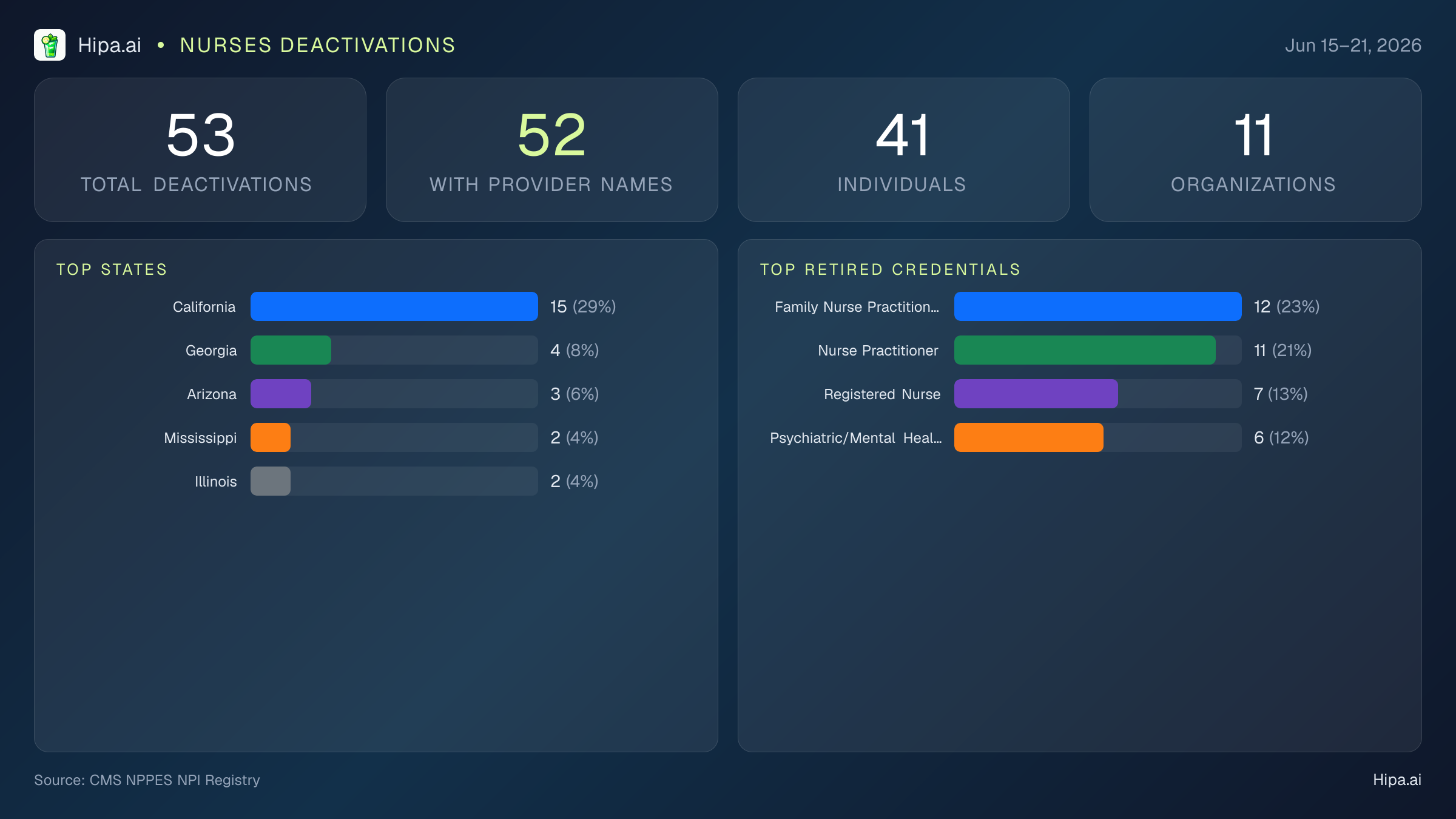
The CMS NPPES registry recorded 53 NPI deactivations within the Nurses category during the week of June 15-21, 2026. Of these, Hipa.ai's name cache successfully retrieved names for 52 providers before their records were scrubbed by CMS, indicating that one record was fully anonymized. Individual practitioners accounted for 41 deactivations, while 11 were organizations. Geographically, California led the nation, with 15 deactivations, representing 29% of the named total.
Geographic Distribution of Deactivations
Beyond California's leading count, several other states reported NPI deactivations for nurses. Georgia recorded 4 deactivations, making up 8% of the named total, followed by Arizona with 3 deactivations, or 6%. Mississippi, Illinois, Florida, New York, Ohio, Arkansas, and Texas each saw 2 deactivations, each contributing 4% to the total. This distribution suggests a broad pattern of administrative changes across various U.S. regions, with a notable concentration in California.
Nurses Taxonomy Breakdown
An analysis of the primary taxonomies associated with the named deactivated NPIs reveals the diverse roles within the nursing profession. The most frequent taxonomy was Family Nurse Practitioner, accounting for 12 deactivations, or 23% of the named total. Nurse Practitioner followed closely with 11 deactivations, representing 21%. Registered Nurses made up 7 deactivations (13%), while Psychiatric/Mental Health Nurse Practitioners saw 6 deactivations (12%). Licensed Practical Nurses had 4 deactivations (8%), and Certified Registered Nurse Anesthetists accounted for 3 deactivations (6%). This mix highlights deactivations across both general and specialized nursing roles, including advanced practice nurses.
Contextualizing NPI Deactivations
NPI deactivations are a routine administrative process within the federal NPPES registry. They do not inherently signify license actions, malpractice, or a cessation of practice. Providers may have their NPI deactivated for various reasons, including retirement, changing practice locations, consolidating multiple NPIs into a single record, or administrative updates by CMS. The observed deactivations reflect ongoing maintenance of the national provider database and the natural churn within the healthcare workforce.