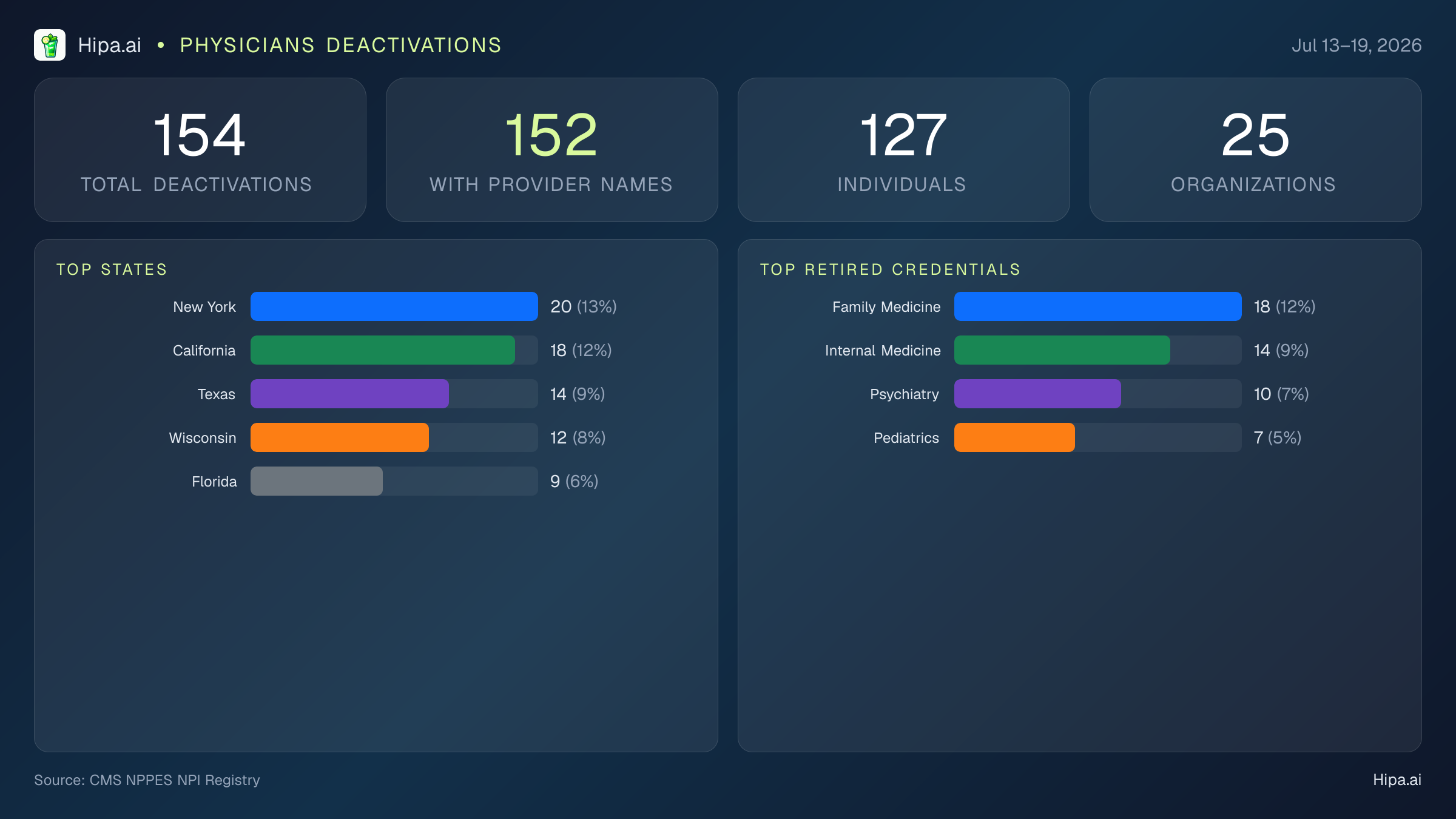
The CMS NPPES public registry recorded 154 NPI deactivations within the Physicians segment during the week of July 13-19, 2026. Of these, 152 records had names retrievable by Hipa.ai's cache, while 2 records had names removed by CMS due to privacy policies. Individual physicians accounted for 127 deactivations, with organizational entities making up the remaining 25 records. New York posted the highest number of deactivations, representing 13% of the national total for physicians this week.
Geographic Distribution of Deactivations
New York led the states with 20 deactivations. California recorded the second-highest volume with 18 deactivations, or 12% of the total. Texas followed with 14 deactivations, representing 9%. Other states with notable deactivation counts included Wisconsin with 12 records (8%), Florida with 9 records (6%), and Pennsylvania with 8 records (5%). This concentration in populous states often reflects the larger overall number of practicing providers and the natural churn within the healthcare workforce in these regions.
Specialty Mix Among Deactivated Records
An analysis of the named deactivated physician records reveals a diverse mix of specialties. Family Medicine led with 18 deactivations, accounting for 12% of the named total. Internal Medicine followed with 14 deactivations, or 9%. Psychiatry recorded 10 deactivations, representing 7%. Other significant specialties included Pediatrics, General Practice, Emergency Medicine, and Neurological Surgery, each with 7 deactivations (5%). Orthopaedic Surgery saw 6 deactivations (4%), while Diagnostic Radiology and Surgery each had 5 deactivations (3%). The prevalence of primary care and common medical specialties suggests a broad administrative retirement or re-registration pattern across the physician workforce.
Contextualizing NPI Deactivations
NPI deactivations are an administrative status change within the federal NPPES registry and do not inherently indicate license actions, malpractice, or that a provider has ceased practice. These changes are a routine part of registry maintenance, reflecting various administrative events such as provider retirement, changes in entity type, or obtaining a new NPI. As the registry ages, deactivations naturally increase year over year, contributing to the ongoing administrative churn in the U.S. healthcare workforce data.