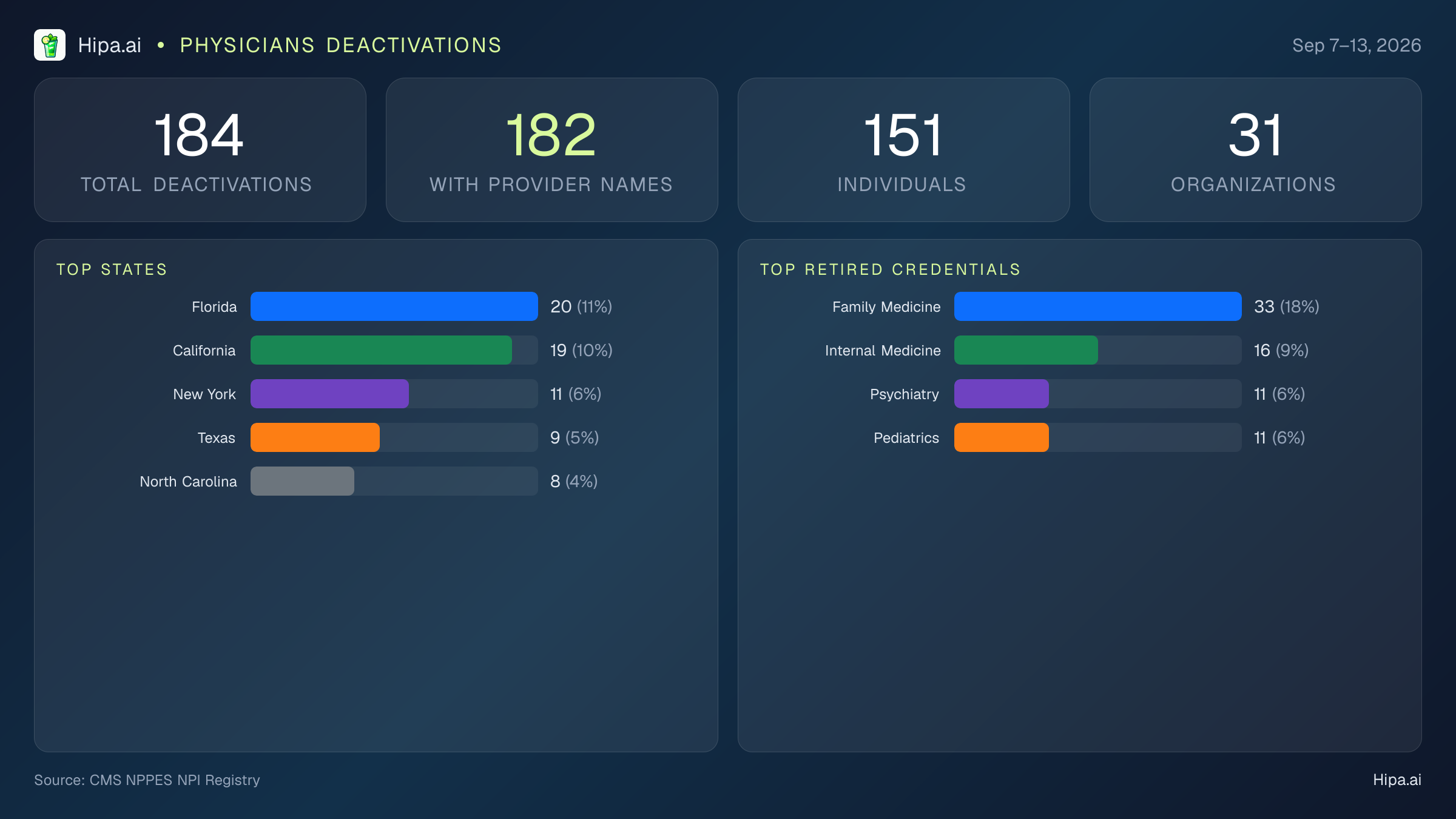
CMS NPPES recorded 184 deactivations in the Physicians segment during the week of September 7 through September 13, 2026. Names were retrievable for 182 records, or 182 of 184, with Florida leading all states at 20 deactivations. The weekly file included 151 individual records and 31 organization records, showing that the administrative activity involved both practitioners and medical entities.
Florida Leads State Activity
Florida accounted for 11% of the weekly total, followed closely by California with 19 deactivations, or 10%. New York recorded 11, Texas 9, and North Carolina 8. Louisiana, Pennsylvania and Colorado each posted 7, while Virginia and Michigan each had 6. New Jersey, Georgia, Oklahoma, Illinois and Vermont each recorded 5.
The geographic pattern is broad rather than concentrated in a single region. Florida and California together represented 21% of all deactivations, while activity extended across large population centers and smaller markets. The state rankings describe where NPPES records were retired during the week, not where physician employment or clinical capacity necessarily declined. Multiple records can reflect organizations, locations or separate administrative identities.
Primary Care Tops Taxonomy Mix
Family Medicine was the leading taxonomy among the named providers, with 33 records, or 18%. Internal Medicine followed with 16 records, or 9%. Psychiatry and Pediatrics each accounted for 11 records, or 6%, while Emergency Medicine and Anesthesiology each had 10, or 5%.
Orthopaedic Surgery contributed 9 records, or 5%. General Practice accounted for 8, or 4%, and Diagnostic Radiology and Cardiovascular Disease each recorded 7, also 4%. The mix spans primary care, hospital-based specialties, behavioral health and procedural fields. Family Medicine’s lead suggests that the week’s activity was particularly visible among broad-based physician practices, but the range of taxonomies indicates no single specialty explains the file.
What the Registry Captures
CMS reported 184 deactivations, but two records were scrubbed of identifying details before publication. Hipa.ai’s named subset comes from its public-source name cache, which captured names before CMS removed them; the 182 retrievable names therefore do not represent every record in the federal count.
An NPI deactivation is an administrative registry status, not by itself evidence of a license action, malpractice or a provider leaving practice. The week’s records may reflect routine registry maintenance, retirement, organizational consolidation or providers obtaining new NPIs. In a system where individuals and organizations can hold multiple NPIs, deactivation data is best read as a measure of registry churn rather than a direct count of physicians exiting the workforce.