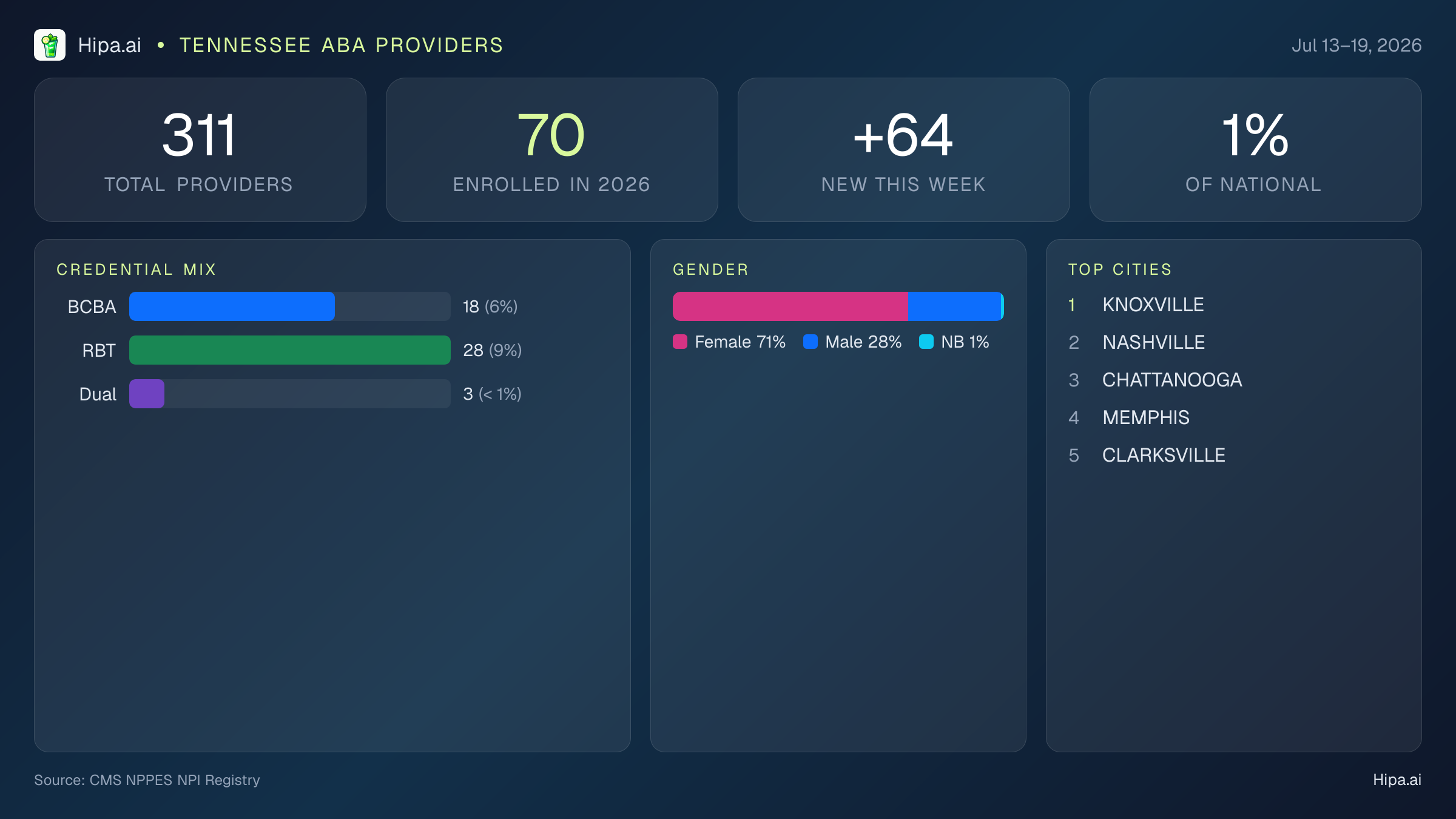
Tennessee's behavioral health sector saw significant activity in the latest CMS NPI registry update, with 311 total providers recorded. The state contributed 1% of the national weekly total, with 64 new providers enrolled this week alone. This consistent influx of professionals signals a steady effort to expand the state's behavioral health workforce, which is crucial for addressing local demand for services.
ABA Workforce Dynamics
Within the applied behavior analysis (ABA) sector, the data shows 18 BCBA credentials and 28 RBT credentials. These categories are not mutually exclusive, as 3 individuals hold both BCBA and RBT credentials, often signifying a comprehensive skill set or career progression. The presence of 18 BCBAs to supervise 28 RBTs, while a reasonable ratio, highlights the ongoing need for growth in supervisory-level practitioners. A robust BCBA workforce is essential for ensuring high-quality ABA therapy delivery and supporting the professional development of RBTs, who provide direct client care.
Provider Demographics
Of the 289 individual providers, the workforce is predominantly female, with 204 individuals identifying as female (71%), 82 as male (28%), and 3 as nonbinary (1%). This gender distribution aligns with national trends observed in the broader behavioral health field. No specific organizations appeared multiple times in this update, suggesting a diverse employer landscape rather than dominance by a few large multi-state chains.
The steady growth in Tennessee's behavioral health professionals, including those in ABA, is vital for enhancing access to services and meeting the state's evolving demands for specialized care.