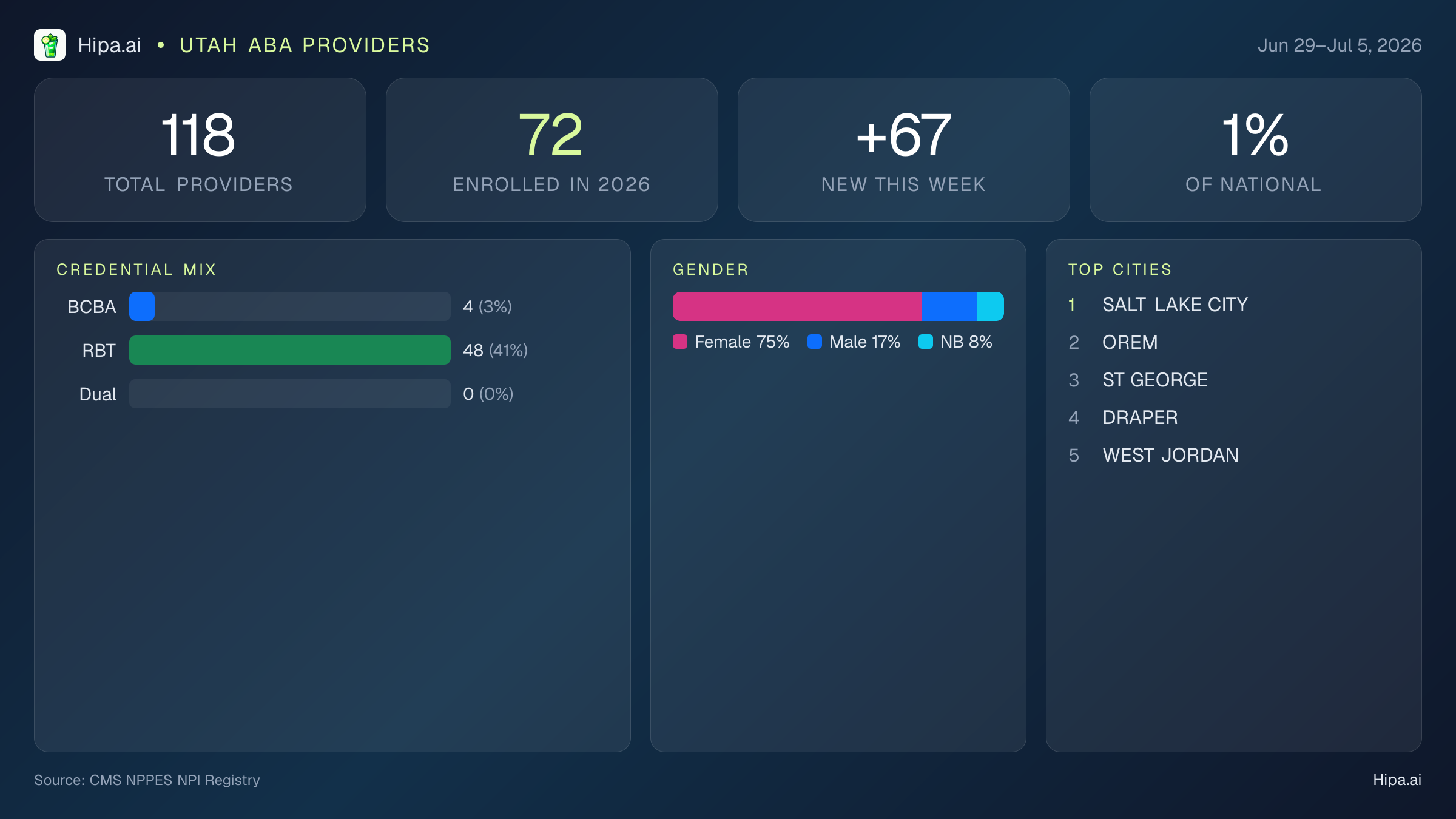
Utah saw 118 behavioral health providers added in the latest CMS NPI registry update, with 67 new enrollments this week alone. This represents 1% of the national total, indicating a steady, albeit not explosive, expansion of the behavioral health workforce in the state. This consistent growth suggests Utah is actively working to meet increasing demand for services, though its share of national additions points to a developing market rather than a saturated one.
ABA Workforce Dynamics
Focusing on the ABA sector, the data shows 4 BCBA credentials and 48 RBT credentials. There were no individuals holding dual BCBA and RBT credentials in this update. The ratio of BCBAs to RBTs, approximately 1:12, highlights a significant reliance on direct service providers. While RBTs are crucial for delivering therapy, this ratio suggests a potential need for more BCBAs to ensure adequate supervision capacity, which is vital for maintaining the quality and ethical standards of ABA services.
Provider Demographics and Organizations
Of the 107 individual providers, the gender breakdown shows 80 female providers (75%), 18 male providers (17%), and 9 nonbinary providers (8%). This distribution is largely consistent with national trends in the behavioral health field, which often sees a higher representation of female practitioners. The update also included 11 new organizations, though no specific multi-state chains or large local entities appeared multiple times in this particular dataset.
Overall, this data suggests a growing but imbalanced ABA workforce in Utah, where continued efforts are needed to bolster the ranks of supervisory BCBAs to support the expanding RBT workforce and enhance access to quality care.