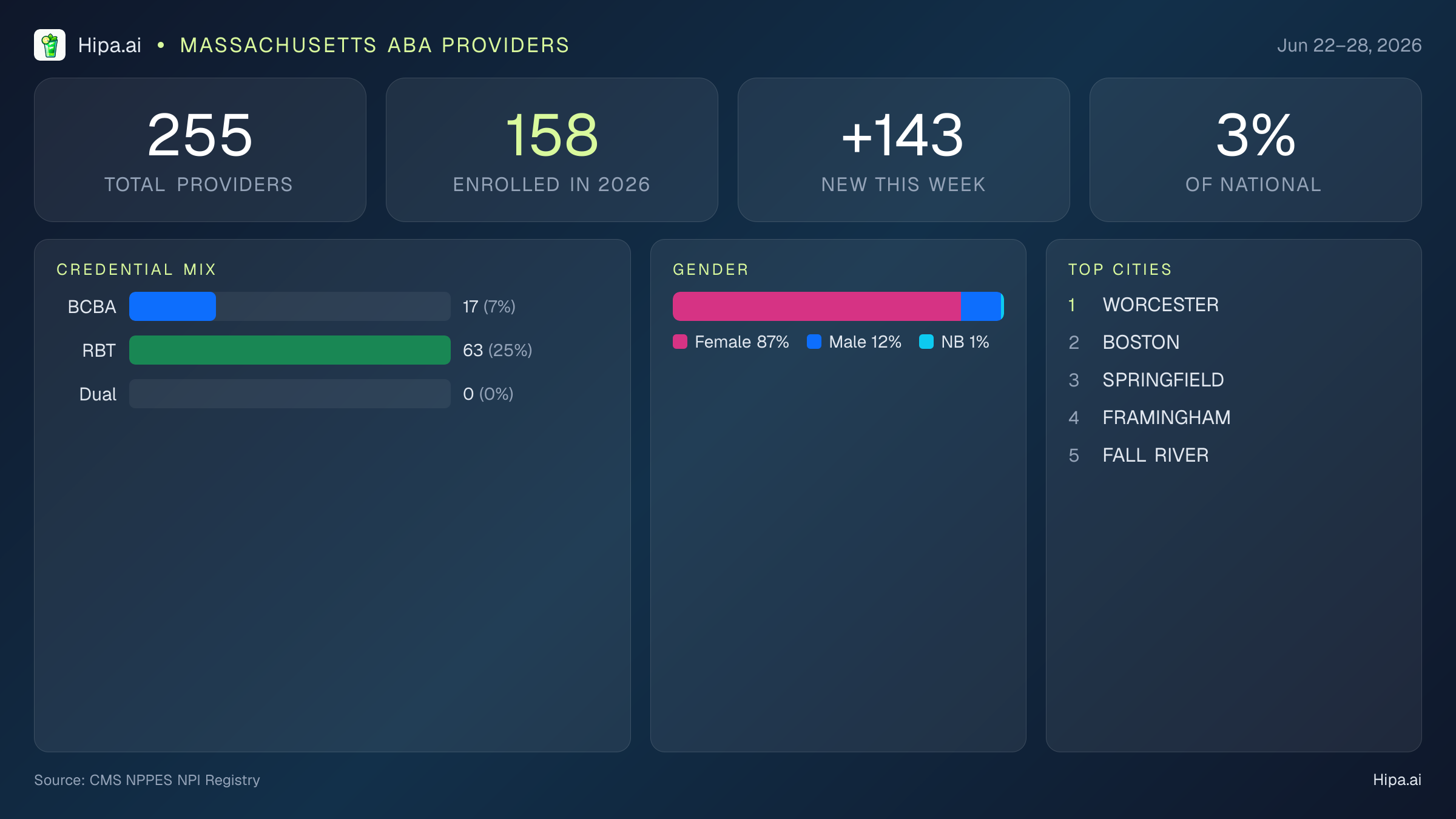
Massachusetts recorded a notable addition of 255 behavioral health providers in the latest CMS NPI registry weekly update, accounting for 3% of the national total. This consistent influx indicates a moderately active and growing behavioral health market in the state, reflecting ongoing efforts to meet diverse patient needs and expand access to care.
ABA Workforce Dynamics
Within the applied behavior analysis (ABA) sector, the latest update shows 17 BCBA credentials and 63 RBT credentials. It's important to note that no individuals held both BCBA and RBT credentials in this specific dataset. The ratio of RBTs to BCBAs, approximately 4:1, highlights the foundational structure of ABA service delivery, where a larger pool of RBTs provides direct therapy under the supervision of fewer, highly qualified BCBAs. This ratio is crucial for clinic operators to assess their supervision capacity and ensure compliance with ethical guidelines and state licensing requirements for LBAs.
Provider Demographics and Organizations
Among the 229 individual providers, the workforce continues to be predominantly female, with 199 individuals (or 87%) identifying as female. 27 individuals (12%) are male, and 3 individuals (1%) identify as nonbinary. This gender distribution aligns with broader trends observed across the behavioral health professions. On the organizational front, BOSTON SENIOR HOME CARE appeared 2 times, suggesting some expansion or new registrations from established entities.
The sustained growth in Massachusetts's behavioral health workforce, particularly within the ABA field, is a positive indicator for expanding access to critical services and addressing the demand for specialized care across the Commonwealth.